
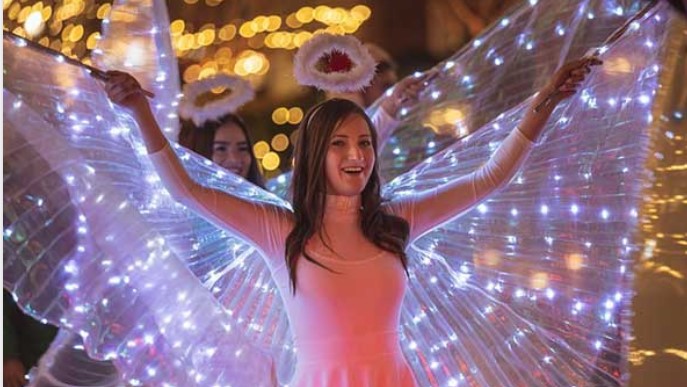
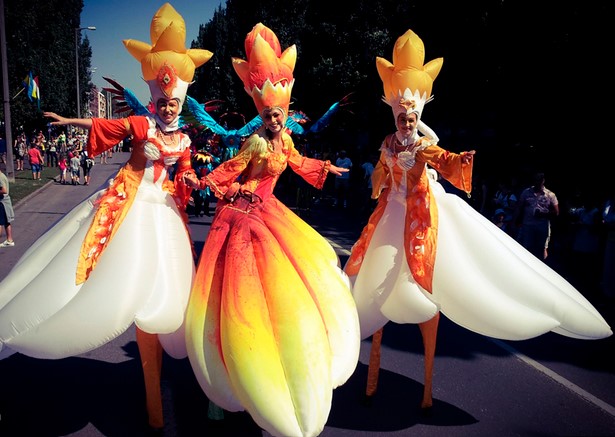
Just a few days after Christmas, there is a special date marked in the calendars in Spain, especially in the calendars of the little ones: the traditional Three Kings Parade (with the subsequent arrival and distribution of gifts in each of our homes).
This tradition has its origins in the Alicante town of Alcoy, back in 1866. It is listed as the oldest Parade in Spain, and possibly in the world, although this tradition could have been born a few years earlier, since there are references to celebrations in the streets of Madrid since 1844, and in Barcelona in 1855 with a parade organized as such.
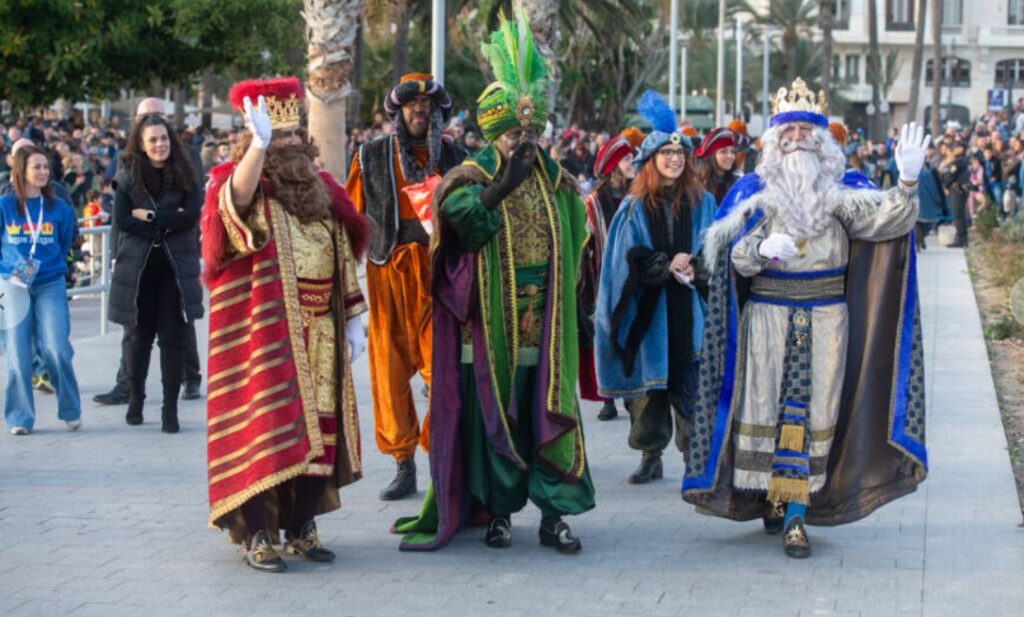
To begin with, on January 4th an Emissary sent by the Kings announces their arrival. He does so through the main streets of the town centre followed by donkeys that instead of carrying saddlebags carry mailboxes where the children deposit their letters with their requests. Torches, pages and music prelude the spectacular entrance to the city of the Kings. The royal entourage is setting up camp. Already in the afternoon of January 5th, the 3 Kings enter Alcoy and behind them, hundreds of pages with voluminous packages go looking for the homes of the recipients of these gifts. Meanwhile, neighbours and visitors crowd the Plaza de España to witness one of the most endearing and anticipated moments: the Adoration. The wise men get off their mounts to give the Baby Jesus of the living nativity scene their gifts. And then, a spectacular fireworks display lights up the square. It is declared a festival of national tourist interest.
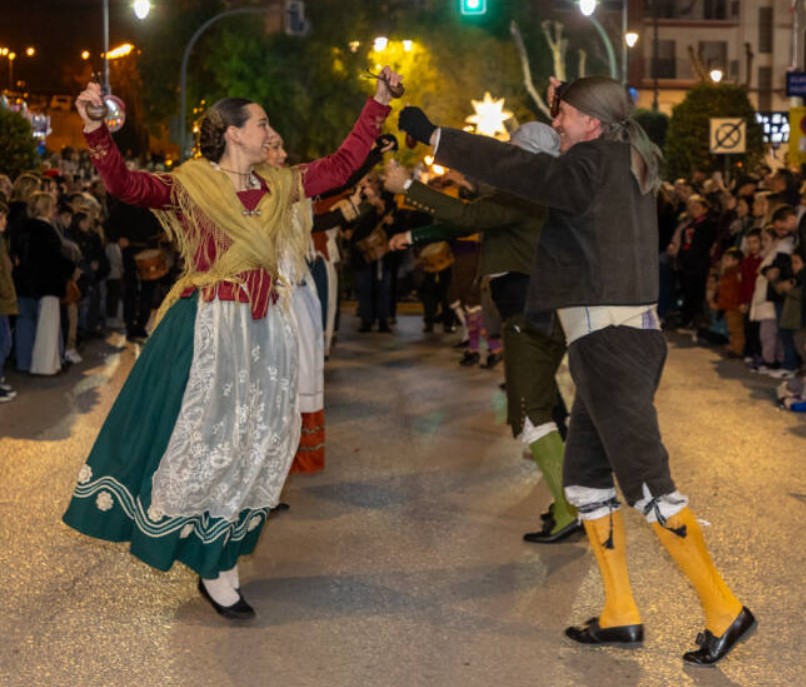
At the end of the 19th century, theatrical performances about the arrival of their majesties the Three Wise Men, and the subsequent Adoration of the Child, began to be held in the city of Granada, although they only lasted a few years. In 1912, and on the initiative of the Artistic Centre of Granada, this theatrical tradition was revived, but a Parade was also organised with the aim of collecting toys to distribute to the most disadvantaged. This solidarity initiative was so successful that it later spread throughout the rest of the Andalusian community, and therefore throughout the rest of Spain.
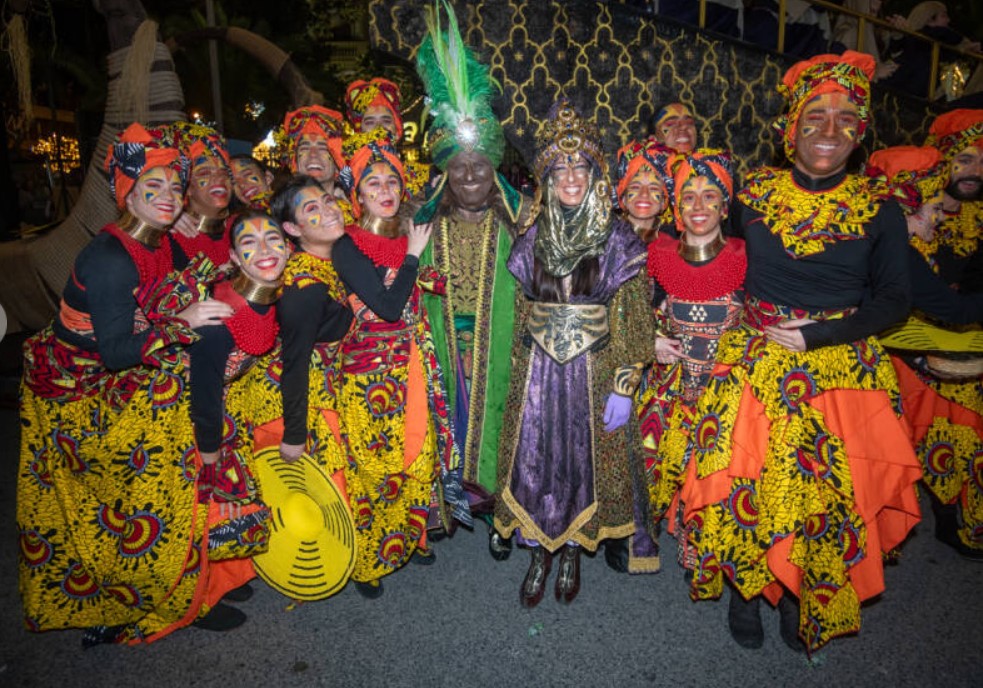
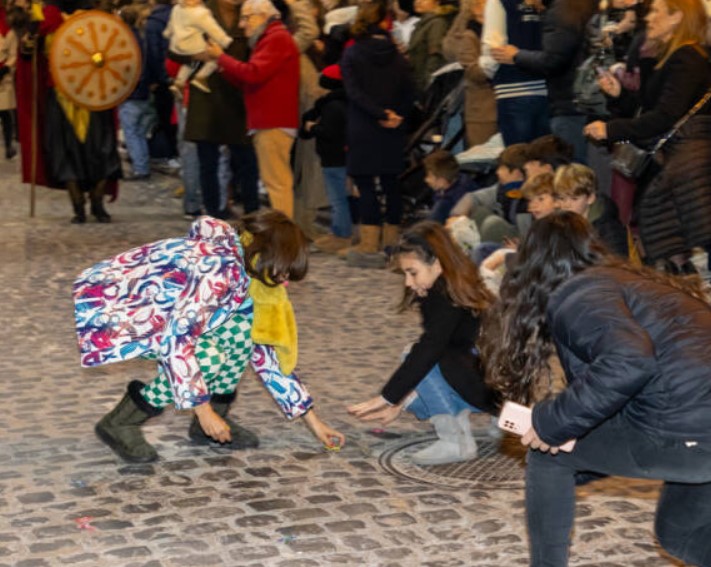
Since we lived in Alicante, I usually went to the parade in the centre. Went with my three children and an umbrella. We loved the parade, the music and dances and also the presents. My two eldest children have always been tall ones so we had some advantages to get the presents. If the gift was coming high in the air, it was easy for them to catch it. My youngest and obviously shortest at that time, took care of all the sweets that were thrown and ended on the floor. Most of the parade she would spend looking for sweets on the street and hardly saw the dances.
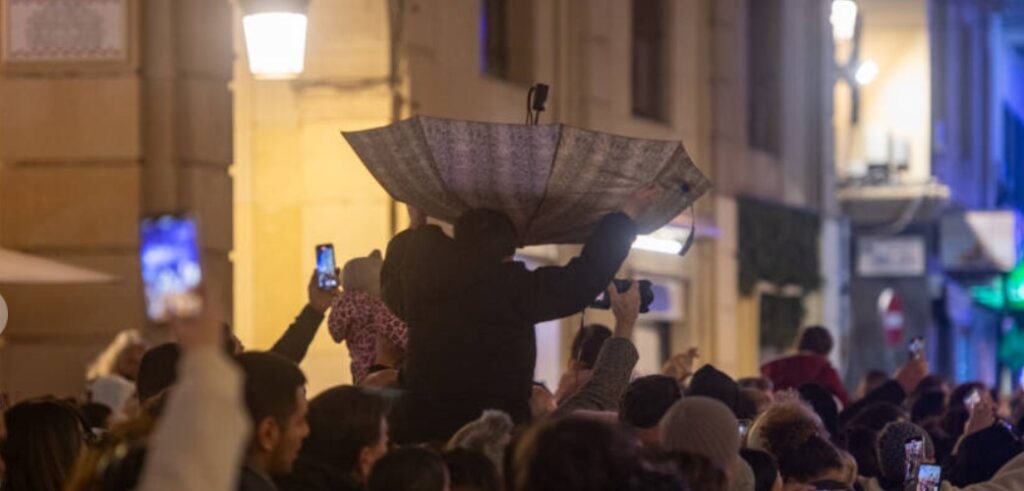
I mentioned an umbrella. I certainly did not take it in case it rained. I opened it and put it upside down so (I should say I’m not the tallest person) I could catch any gift coming my way. With these advantages, we always returned home with 2-3 bags full of presents, needless to mention with the pockets full of sweets.
Although a tradition, it is so nice to see the happiness in the children’s faces. Although I am in my sixties, I still love the 5th and 6th January. Many memories come to my mind and still enjoy them as if I was still a child.
“Children see magic, because they look for it.” -Christopher Moore